Glass and Window Takeoff Software for Glazing Contractors
Togal.AI finds every window, door, and glazed opening across a full drawing set, then measures the glazed areas and frame lengths behind them. Search one mark from the schedule and every instance comes back, on plans and elevations, sized and ready to price.








Glass and window takeoff software, 4X faster
Togal reads the whole set in one pass and returns glazed area and frame length off the same opening. Takeoffs come back up to 4X faster.



What slows glazing and window estimators down
An opening package is repetitive rather than difficult, which is why it eats the bid calendar.
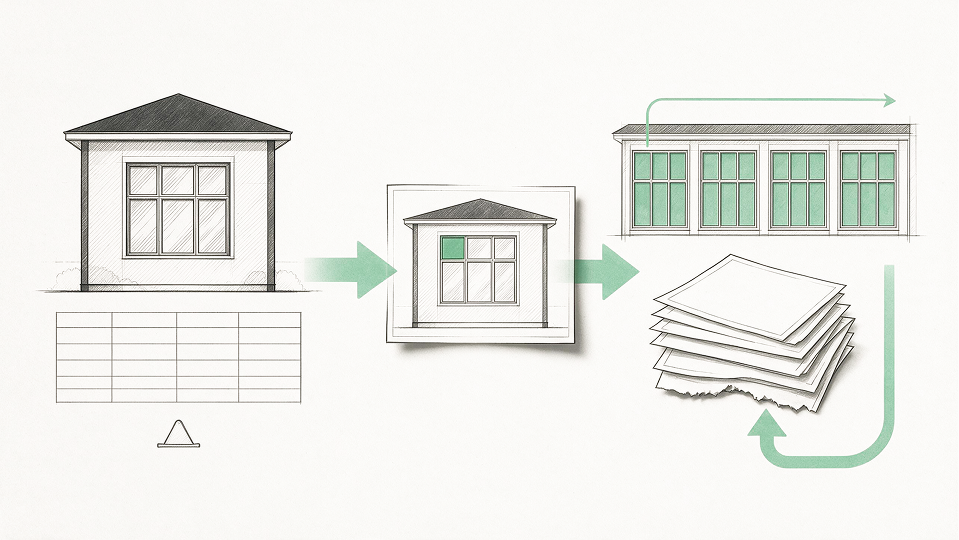
One mark lands on a plan, an elevation, and an enlarged sheet, so it gets counted twice or missed once
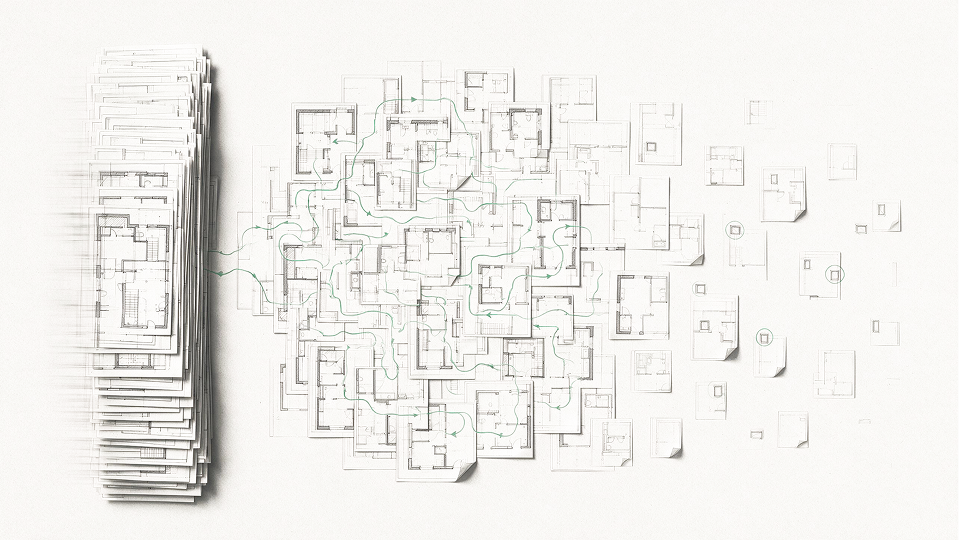
The schedule gives you 40 marks scattered across 200 sheets you page through by hand
You trace each opening twice, once for glass area and once for frame and sealant, and neither task needs your judgment
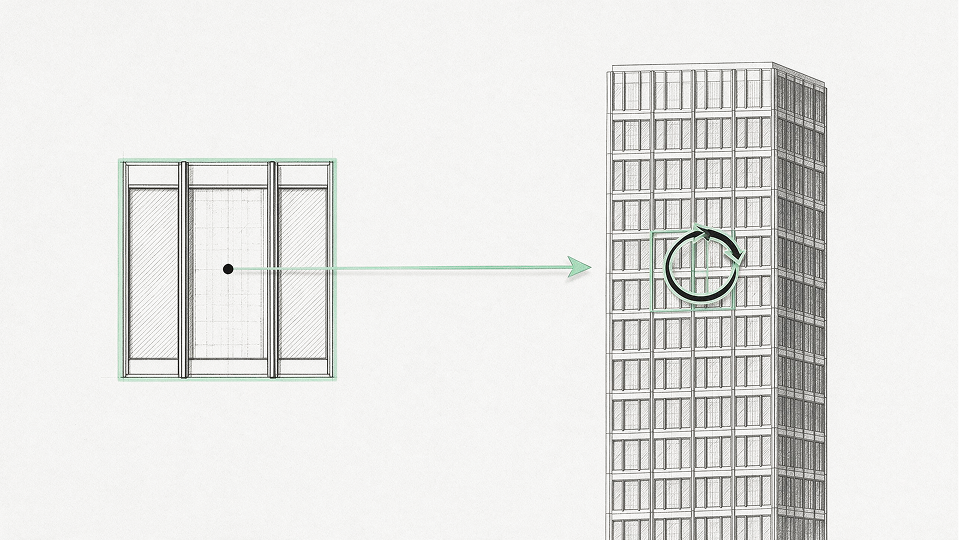
You rebuild the same curtain wall bay floor after floor on a hotel or a tower
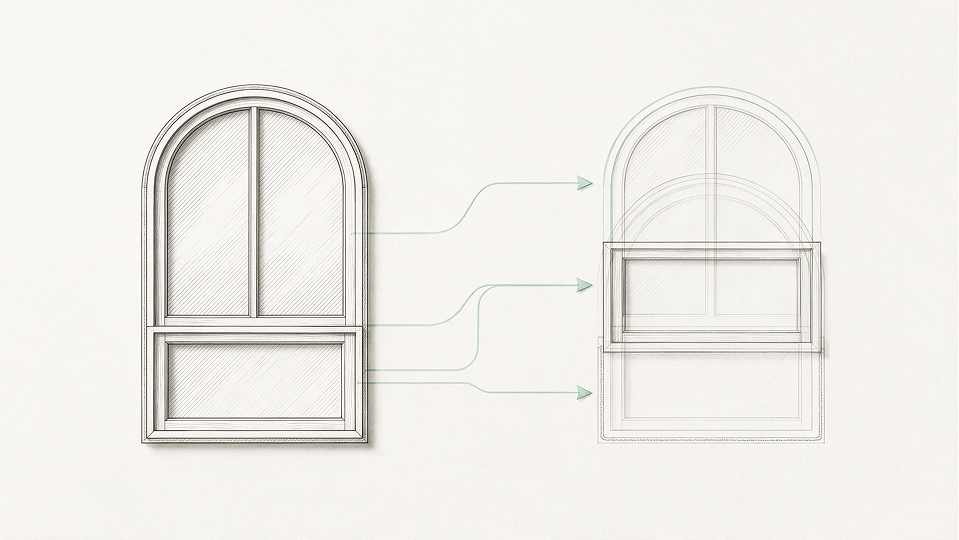
An addendum swaps a glass type after
pricing, and the rework comes out of your
profit margins
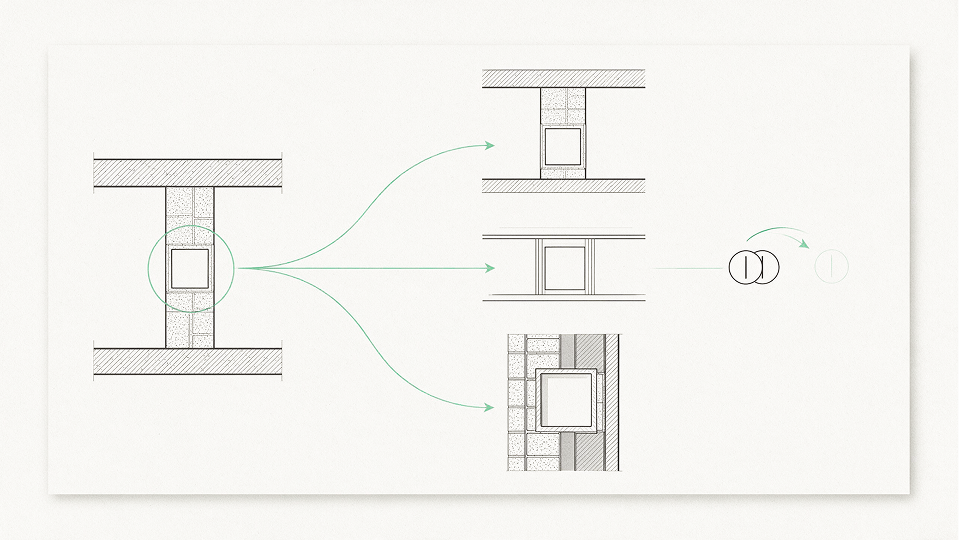
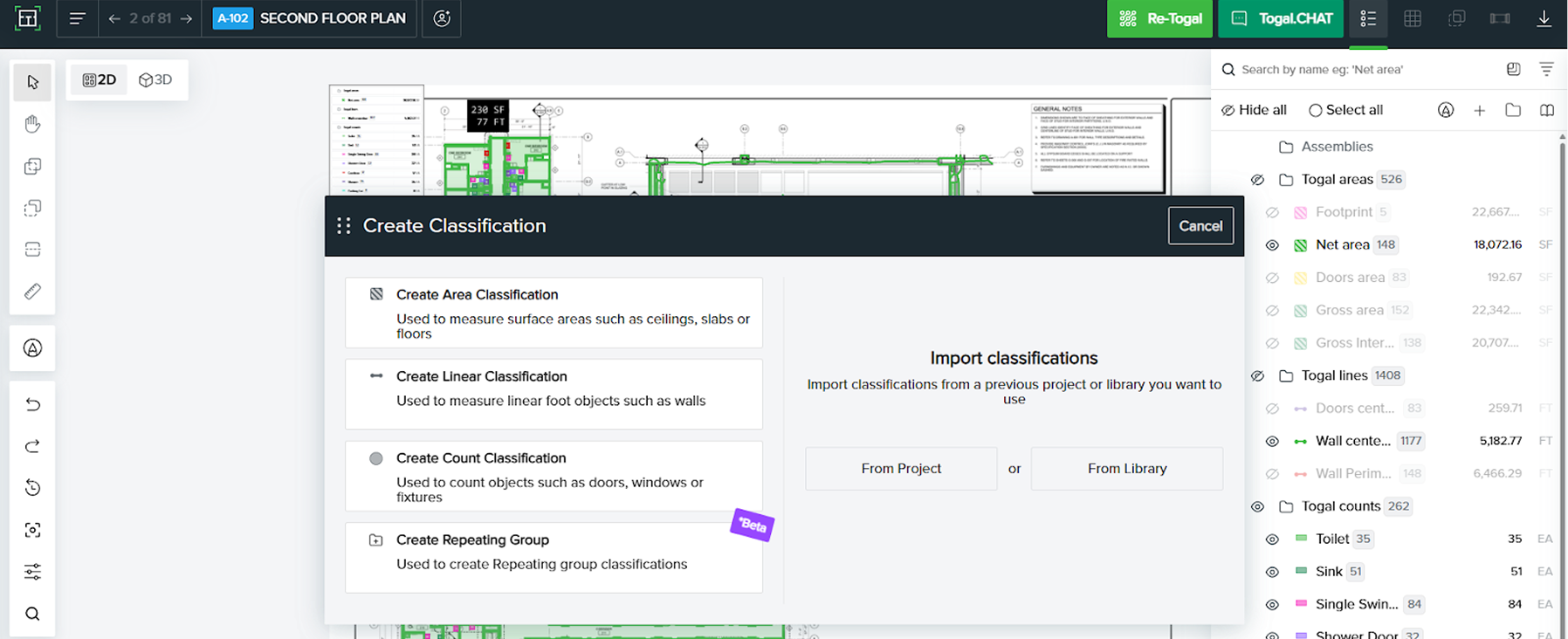
How Togal takes off a glazing package in one pass
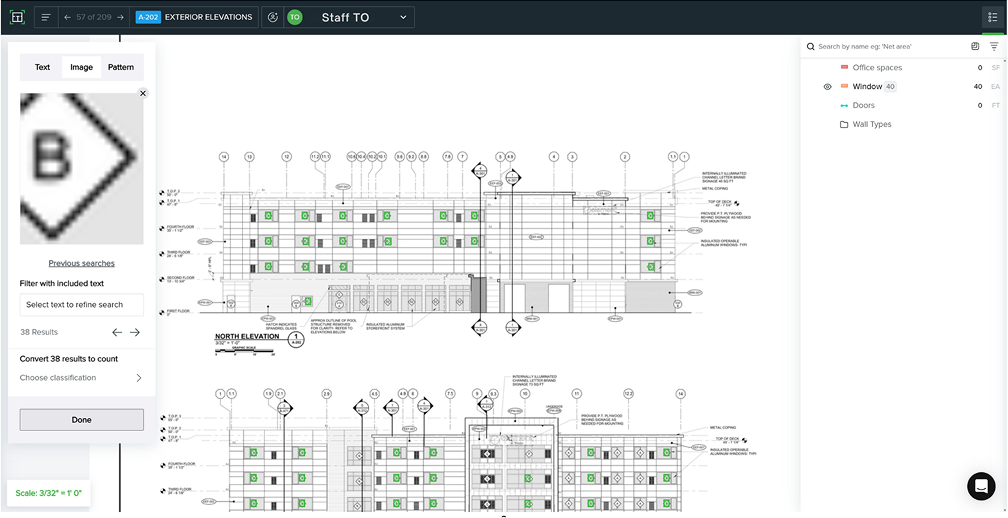
Find every mark in one search
Type a schedule mark into Text Search and every instance returns at once - plans, elevations, schedules, scanned sets included. When the symbol matters more than the tag, box it and Image Search finds that shape everywhere it repeats.
Measure each opening once
One pass returns glazed area and frame perimeter as separate conditions, so the second trace never happens
Manual tools sit alongside the automated pass - split, cut, merge, and arc anything classified loosely, including curved bays
Run the Togal Button where interior glass partitions follow room boundaries
Classify by mark, so storefront, curtain wall, and other glazing systems stay separate
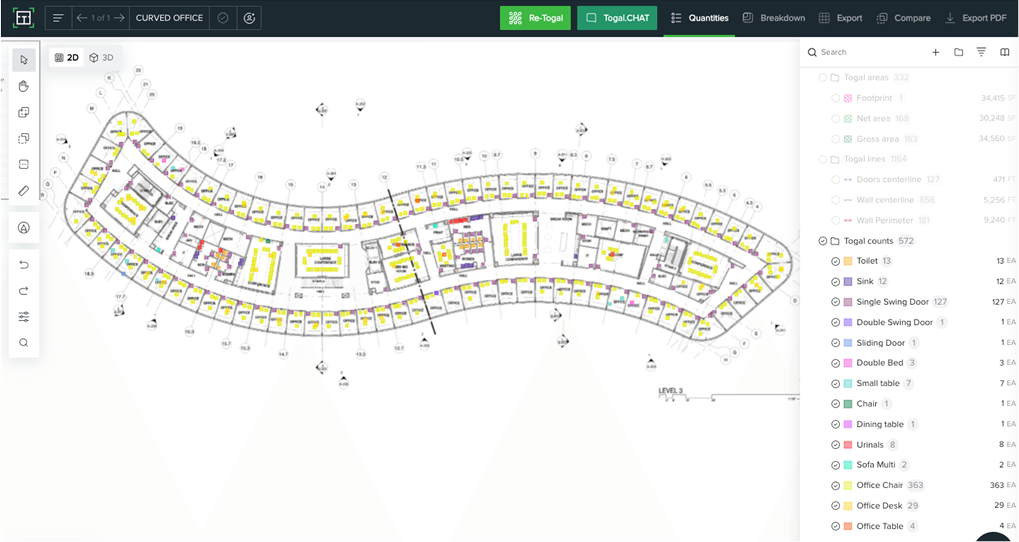
Take a repeating bay
off once
Hotels and multifamily towers repeat the same opening package floor after floor. Repeating Groups makes a 20-story tower one takeoff instead of twenty.
Flip and rotate placements to match plan orientation
Edit the master unit and every instance updates
Quantities aggregate across instances, and exports organize by group
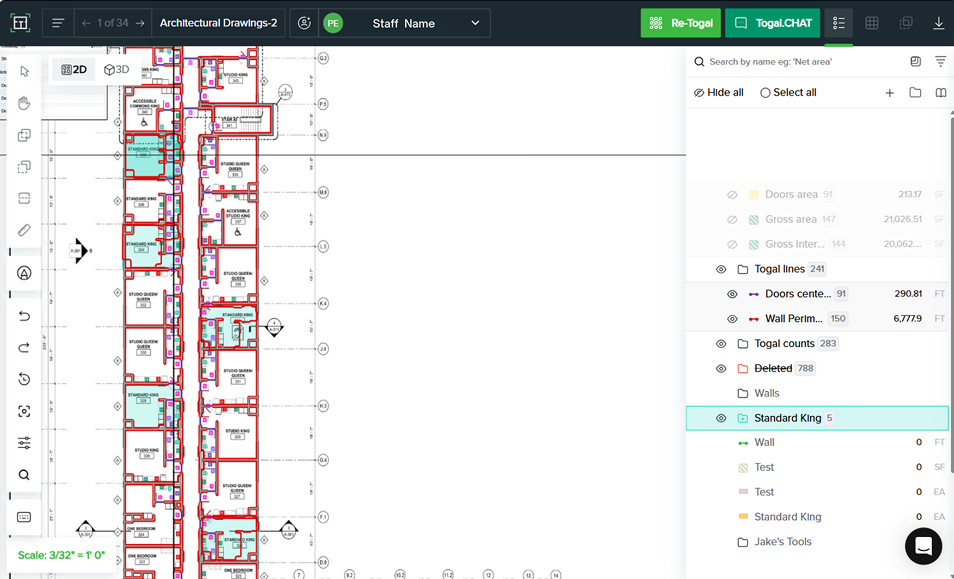
See the change before
you re-price it
An addendum lands and Drawing Comparison tells you what actually moved, so you re-price the marks that changed instead of the package. Both versions stay in the project, which gives you something to show the GC.
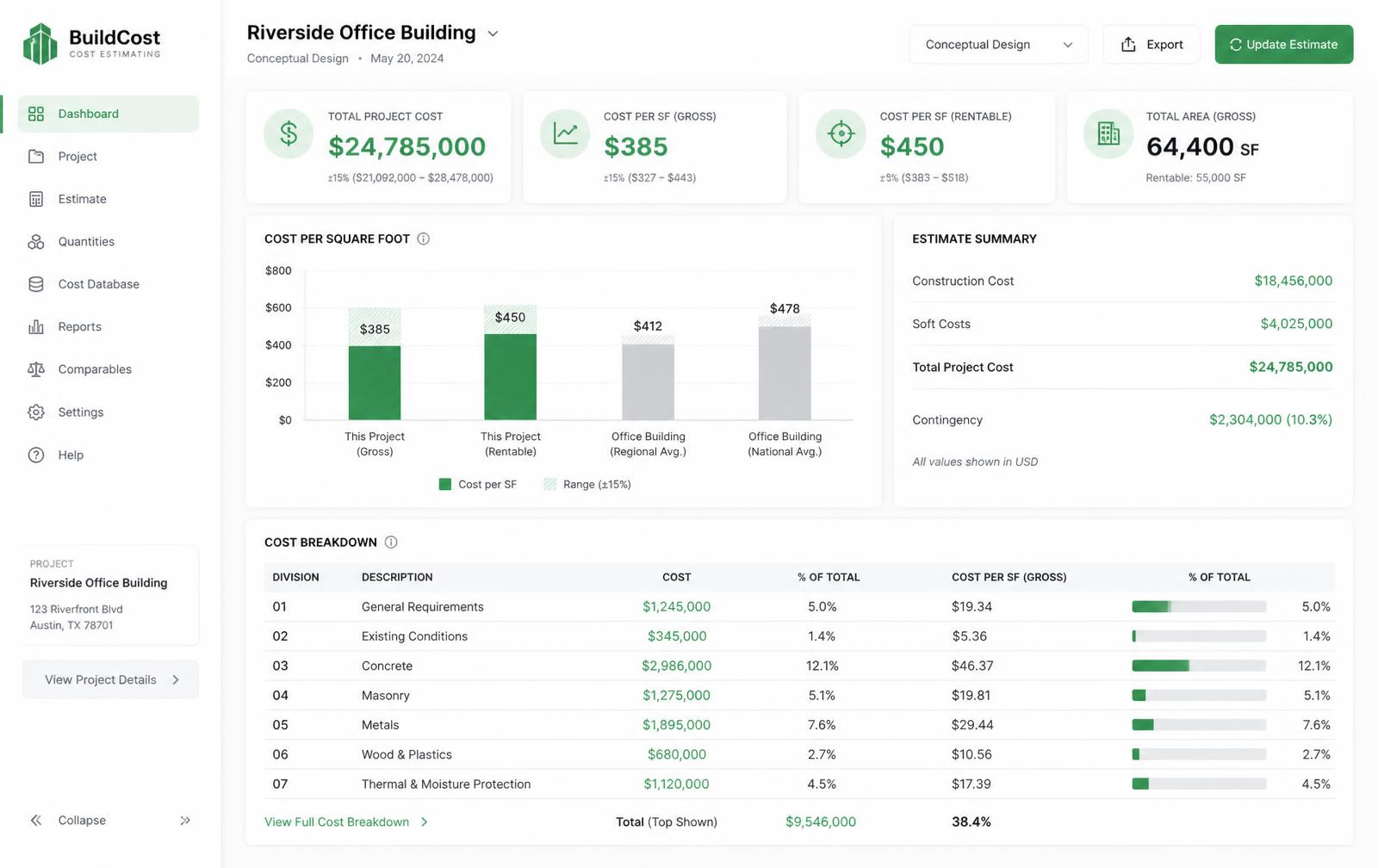
Get quantities out the way you bid
Name a classification once and apply it to every instance of that mark
Group types into folders so exports come out the way you bid
Build Custom Formulas into a classification, such as Total = Area × Unit Cost
Export grouped, filtered quantities into Excel or your estimating software, ready to price
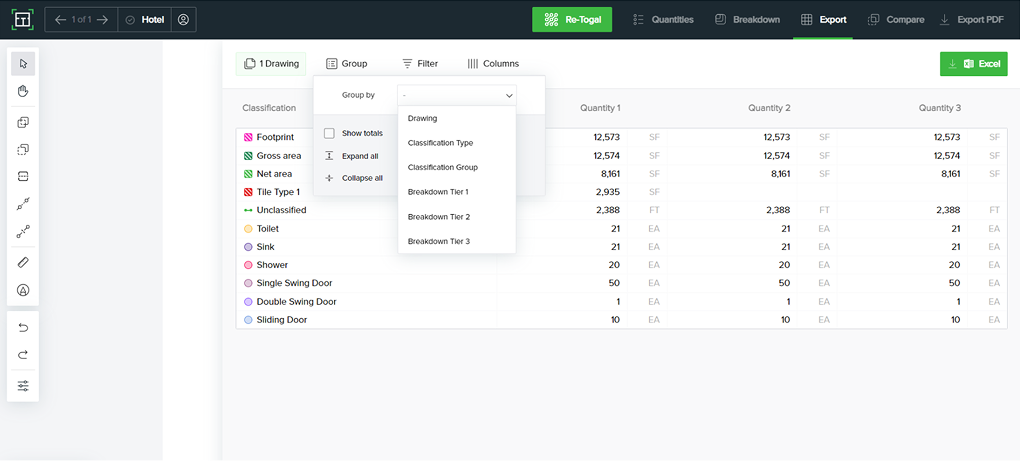
Carry the numbers into pricing
Name a classification once and apply it to every instance of that mark
Group types into folders so exports come out the way you bid
Build Custom Formulas into a
classification, such as Total = Area × Unit Cost
Export grouped, filtered quantities to Excel or into the estimating software your team already prices in
Everything Togal measures for
glass and windows
Counts
Window marks by type
Door marks by type
Storefront and curtain wall units
Sidelites, transoms, and borrowed lites
Skylights and overhead glazing
Louvers, vents, and non-glazed openings
Hardware and accessory symbols
Repeated bays across floors
Areas
Glazed area by opening
Storefront and curtain wall elevation area
Spandrel and vision panel splits
Interior glass partitions
Total opening area by type
Area by floor, elevation, or building
Lengths
Frame perimeter by opening
Head, jamb, and sill lengths
Mullion and intermediate framing runs
Perimeter sealant and backer rod
Handrail and guardrail glass runs
Built from your quantities
Unit costs applied through Custom Formulas
Waste factors applied per classification
Quantities grouped by mark, type, or elevation
From takeoff to estimate
Counts matter once they reach the number you submit, so quantities land in the workflow your team already prices in and nothing about your estimating process has to change.
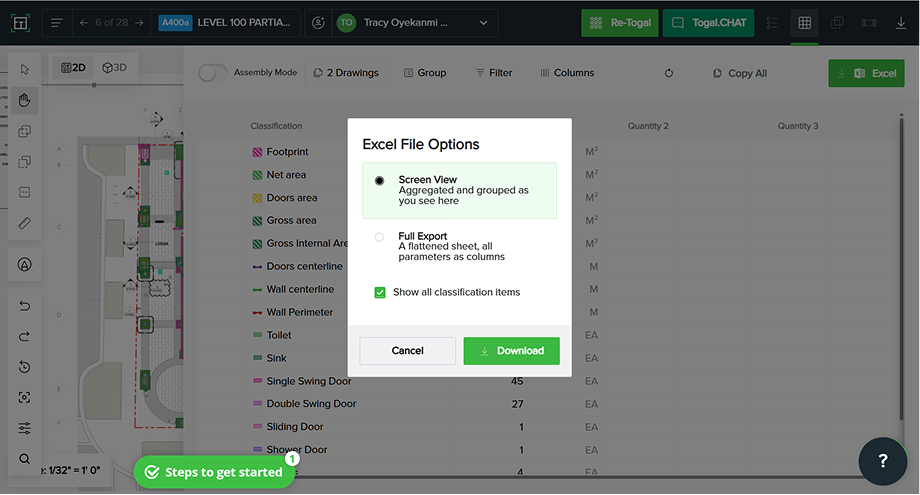
Excel export
Quantities come out organized, filtered, and grouped, so they drop into the spreadsheets your team has bid from for years.
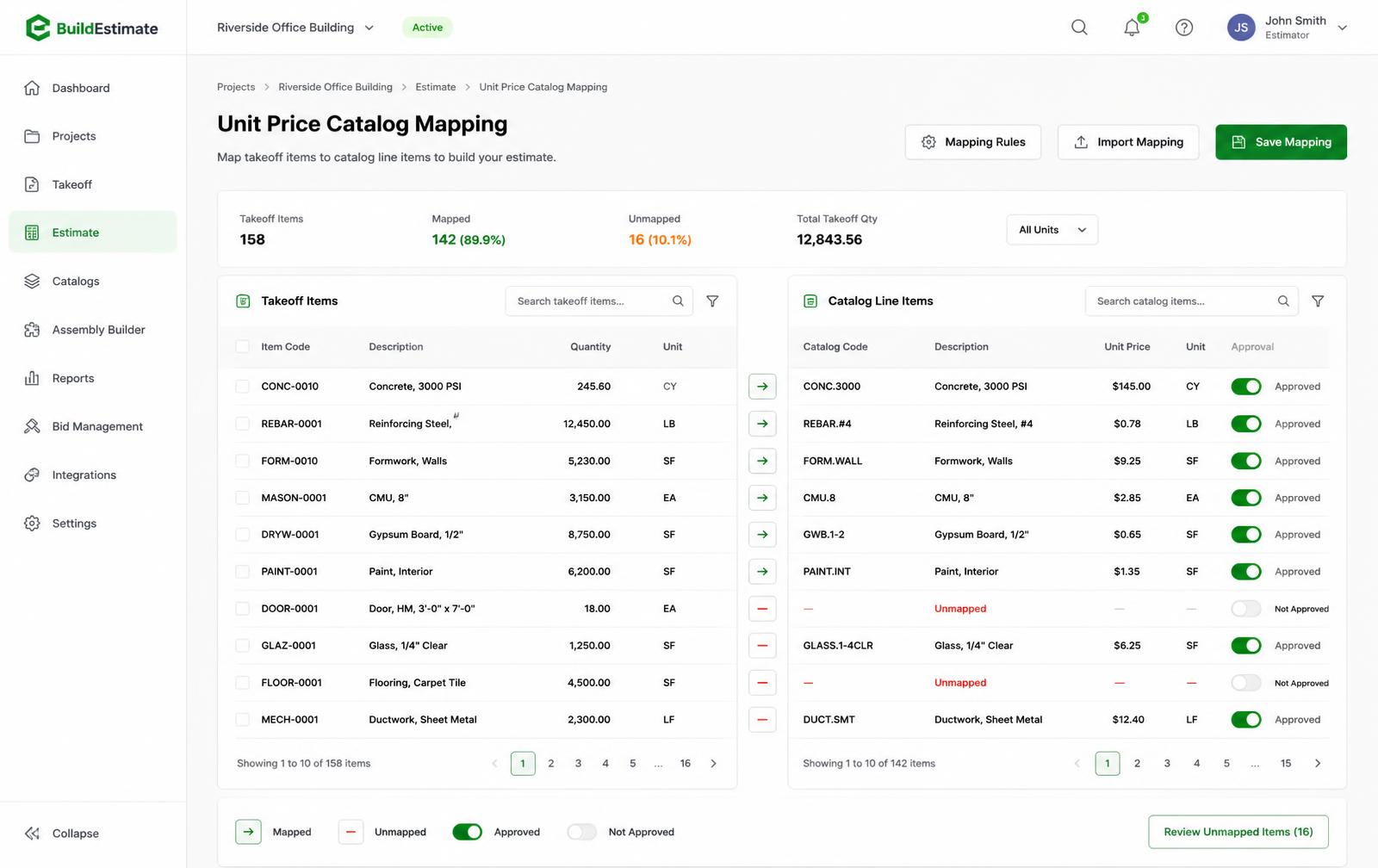
Ediphi
Native integration maps quantities to your Unit Price Catalog items, with your approval before updates land.
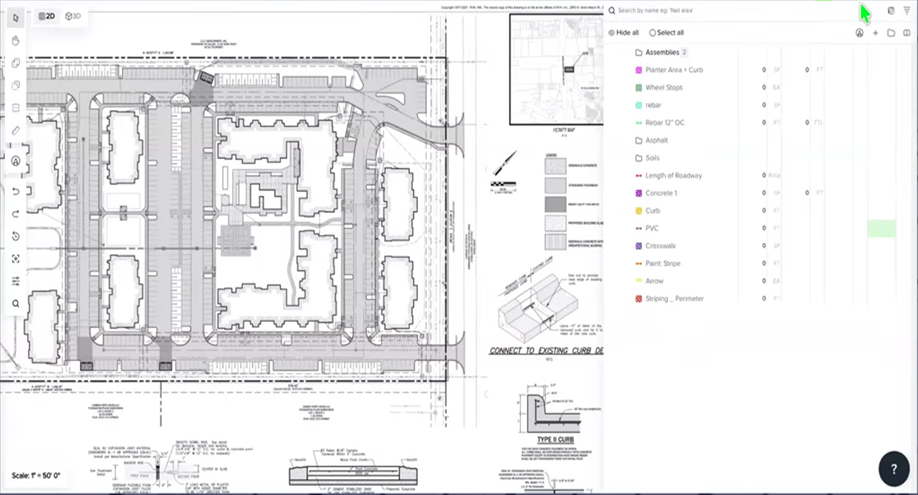
Zebel
Connects quantities to cost data for conceptual and design-stage pricing.
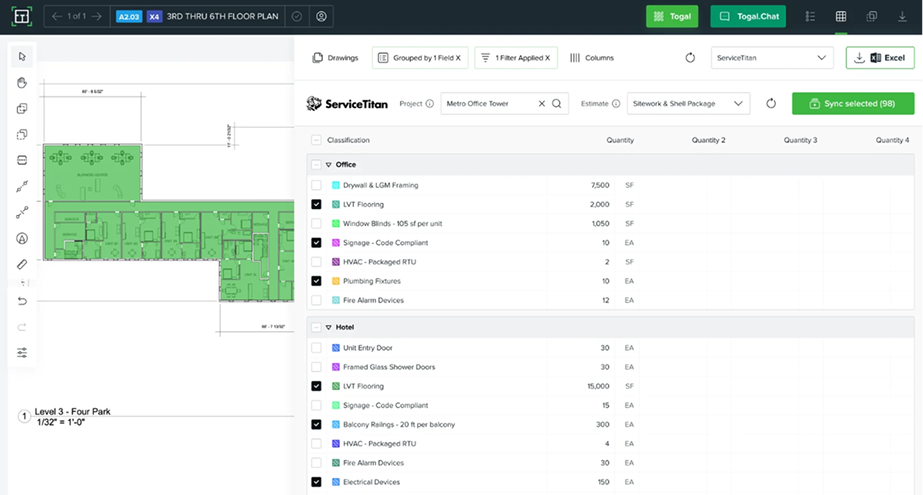
ServiceTitan
Built for trade contractors running estimating alongside service work.
What else comes with Togal
Work from wherever the bid is
Togal is cloud based and runs in a web browser. A takeoff started at the office opens on an iPad in a GC's plan room, on the current file.
Plans sorted on upload
Auto-Naming reads sheet numbers and titles, so a 400 page permit set is organized before you find the elevation you wanted.
Check heights before you quote them
The interactive 3D view puts openings in context, which is where a sill height that reads fine in plan turns out to be something else.
Ask the plan set a question
Togal.CHAT answers from your drawings, so you can pull the glazing scope out of the specifications or draft an RFI about a missing frame detail.
Bring the GC or the glass supplier in
Real time collaboration lets people outside your account into the project, with you setting what each can do, so you and the GC stay on the same page.
Pass the IT review
SOC 2 Type II compliant, with enterprise SSO support.
Who Togal is built for
Togal fits glazing, curtain wall, window, and door contractors bidding commercial work, plus the GCs pricing the opening package before subs come back. The clearest signal of fit is a dedicated estimator, whether that is one person carrying every bid or an estimating team splitting a job across several.

Estimating

Preconstruction

inside a larger GC scope

Proof estimators can check



How Togal compares on price and control
Questions glazing and window estimators ask
Sizing, scanned sets, security, seats, and price — answered the way an estimator would ask.
What is glass takeoff software?
Glass takeoff software measures a glazing package straight from the construction documents: window and door mark counts, glazed area per opening, and linear footage of framing and sealant. Togal.AI reads the full set, elevations and schedules included, then hands you quantities to price materials and labor against.
How does it calculate glass area and edge lengths?
It works from the scale of the drawing. An area condition on an opening returns square footage of glass, and a linear condition traced along the same opening returns perimeter footage for framing and sealant, while the mark on the schedule determines glass type and thickness. Togal classifies the openings first, so glass quantity takeoff software gives you accurate measurements to work from rather than a blank sheet, with every number editable.
Does Togal work from elevations, or only floor plans?
Both. Search runs across every sheet you upload, so a mark on an elevation is found in the same pass as the one on the plan. That matters more in glazing than most trades, because sizes live on the schedule while glazed area comes off the elevations.
What happens when the plans are scanned?
Text Search works with any file format, including drawings never published as searchable PDFs. Image Search covers what text cannot, since you can box a symbol and find that shape across the set. On an older set, run both and reconcile against the schedule.
Can the GC see my takeoff without buying a seat?
Yes. Growth and Business both include unlimited external collaboration, so you can share a project with a GC, an architect, or a glass supplier and control what each can do. They do not need their own subscription.
Is my plan data secure?
Togal is SOC 2 Type II compliant, which audits how controls hold up over a period rather than on one date, and supports enterprise SSO. Glazing subs bidding institutional and healthcare work hit these questions during prequalification.
What does Togal cost?
Growth is $299 per user per month billed yearly, with unlimited automated takeoffs, unlimited image and symbol searches, and internal and external collaboration. Teams of four or more move to Business pricing, which adds onboarding, a dedicated support rep, a classification library template, SSO, and quantity discounts.
Will this take work away from junior estimators?
The clicking goes away and the estimating stays. Someone still has to classify each mark, check the count against the schedule, and spot what the drawings are missing. Junior estimators get to that work sooner and spend less time on repetitive tasks.